Under direct sunlight or bright artificial light, does your car's paint look as if it is covered in a web of fine, circular scratches? These unsightly defects—commonly referred to as swirl marks or spiderweb scratches—are the single biggest barrier to achieving a deep, mirror-like reflection. They diffuse light rather than reflecting it cleanly, making even a meticulously washed vehicle appear dull, faded, and aged.
If you are wondering how to remove swirl marks from car surfaces permanently, the answer lies in a specialized automotive detailing process known as paint correction.
Here is an in-depth guide to understanding what causes swirl marks, how paint correction works to eliminate them, and why professional buffing is the ultimate way to bring back a true showroom shine.
What Causes Swirl Marks on Car Paint?
Before learning how to get rid of spider web scratches, it is important to understand where they come from. Swirl marks are not actually circular scratches; they are thousands of microscopic, straight-line scratches running in every direction across your clear coat. When sunlight strikes these tiny grooves, light refracts off the edges, creating the illusion of concentric circles.
The primary culprits behind swirl marks include:
- Automatic Car Washes: Spinning nylon brushes and dirty foam strips at automated washes drag trapped dirt and sand across your paint at high speeds.
- Improper Washing Techniques: Using a single wash bucket, dirty sponges, or low-quality towels grinds surface grit back into the clear coat.
- Wiping Paint While Dry: Wiping off dust or water spots with a dry microfiber cloth creates harsh friction without lubrication.
- Car Covers Used on Dirty Vehicles: Putting a car cover over a vehicle that has fine dust or road grime traps particles against the paint, causing scratches as the cover shifts in the wind.
Filling vs. Removing: Why Wax Doesn't Fix Swirls
A common misconception among car owners is that applying a heavy coat of car wax or glaze will solve the problem. While waxes contain oils and fillers that temporarily mask micro-scratches, they do not permanently eliminate them. After a few rainstorms or car washes, the fillers wash away, exposing the damaged clear coat once again.
True detailing scratch removal requires physically leveling the clear coat around the scratch until the surface is uniform and smooth. This process is called paint correction.
What is Paint Correction? How to Cut and Polish a Car
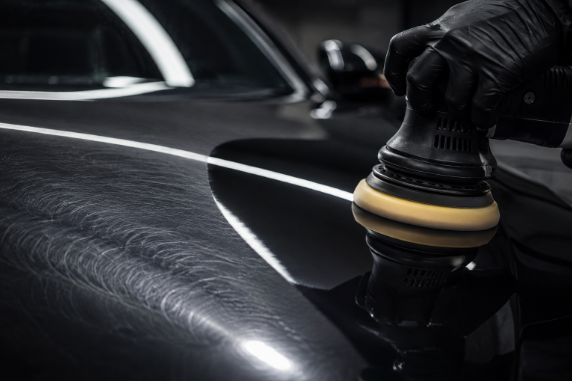
Paint correction is the skilled art of using specialized machine polishers, abrasive compounds, and pad combinations to level out clear coat defects. When detailers cut and polish car surfaces, they are safely removing a microscopic layer of clear coat—measured in microns—to flatten the surface peaks and valleys created by scratches.
Depending on the severity of the damage, paint correction is performed in stages:
1. Single-Stage Paint Correction (Gloss Enhancement)
Ideal for newer vehicles or paint with minor wash hazing. A light polishing pad and finishing compound are used to eliminate 50% to 70% of light defects, dramatically increasing surface gloss.
2. Two-Stage Paint Correction (Swirl Removal)
Designed for vehicles with moderate-to-heavy swirl marks and oxidation. The first stage uses a heavy cutting compound and pad to flatten scratches (the "cut"). The second stage uses a fine finishing polish to remove haze left by the cutting phase, restoring deep, crystal-clear reflections (the "polish").
3. Multi-Stage Correction (Paint Restoration)
Reserved for heavily damaged, oxidized, or neglected finishes. This intensive process may involve localized wet sanding, heavy compounding, and multiple polishing passes to restore dull car paint to near-perfection.
Fixing Dark and Black Car Paint
Owners searching for ways to fix black car paint know the struggle all too well. Black, navy blue, and deep metallic colors absorb more light and act like mirrors, making every single swirl mark, water spot, and buffer trail glaringly obvious.
Because dark clear coats show every flaw, improper buffing techniques can leave behind unpleasant holographic trails or buffer trails. Achieving a flawless finish on dark paint requires precision dual-action polishers, specialized pads, and meticulous lighting setup to ensure every panel is completely leveled and polished without creating new defects.
DIY vs. Professional Auto Buffing in Chicago
While DIY orbital polishers exist for home enthusiasts, achieving professional-grade correction requires experience, technical understanding, and specialized diagnostic tools.
When searching for professional auto buffing or top-rated car polishing chicago specialists, professional studios utilize:
- Paint Depth Gauges: Ultrasonic gauges that measure clear coat thickness to ensure enough clear coat exists to safely polish without burning through to the base paint.
- Dual-Action & Rotary Polishers: High-torque machines that provide controlled heat and friction for uniform clear coat leveling.
- Inspection Lighting: High-CRI LED diffuse lighting that exposes every hidden scratch, hologram, and haze before, during, and after polishing.
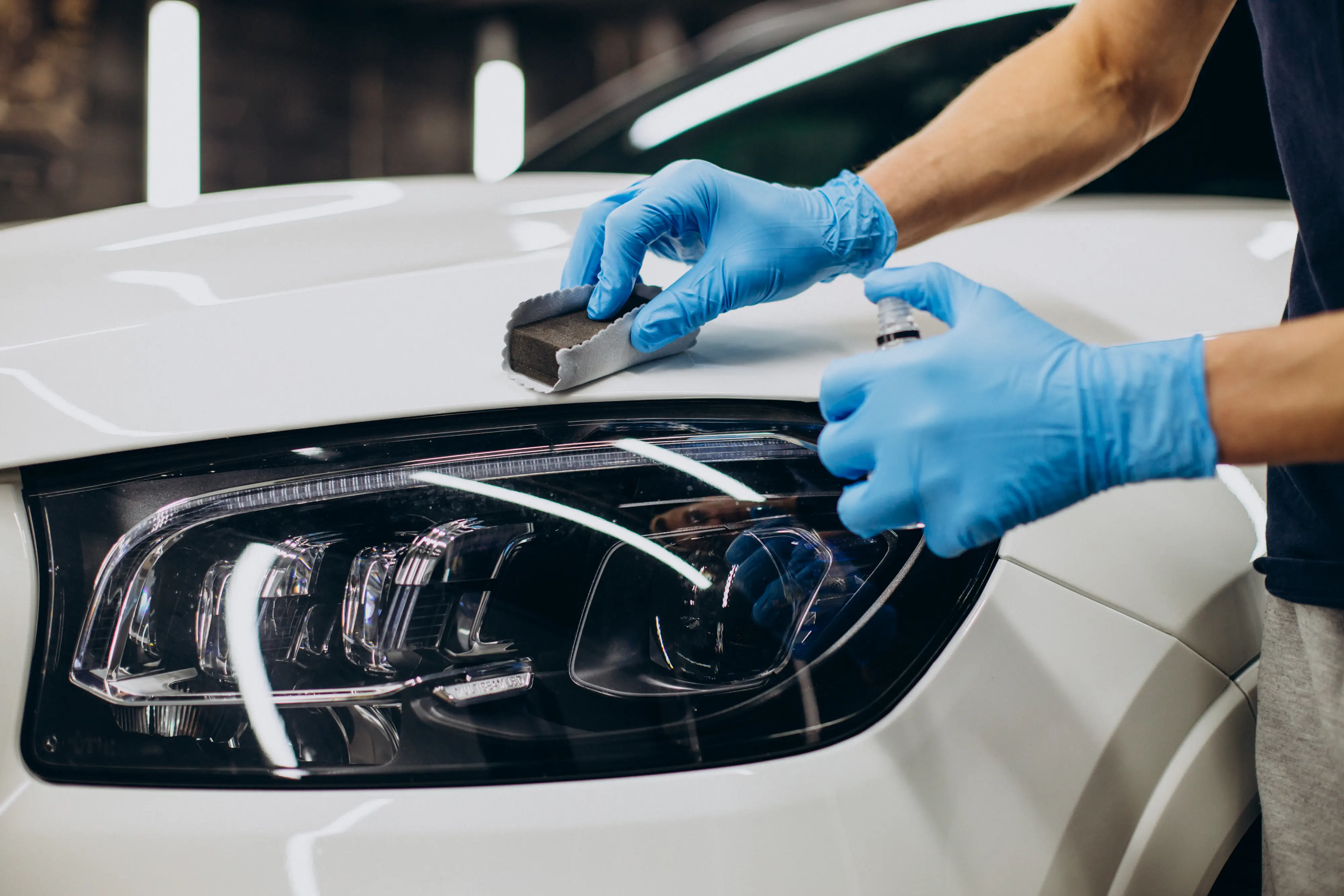
If you are looking for certified paint correction near me, choosing an experienced local installer ensures that your vehicle’s clear coat is measured, corrected safely, and protected with a durable ceramic coating or PPF afterward to preserve the new finish.
The Verdict: The Magic of Paint Correction
Paint correction is the fundamental foundation of all high-end automotive detailing:
Choose Paint Correction if: Your car’s paint looks hazy under the sun, you want to eliminate spiderweb scratches permanently, or you plan to apply a ceramic coating or PPF that requires a pristine base.
Skip Paint Correction if: You are satisfied with a temporary fill from wax, or your paint has severe clear coat failure (peeling or deep scratches that go down to the primer/metal).
By removing swirl marks and restoring optical clarity to your clear coat, paint correction transforms tired, dull paint into a brilliant, liquid-like mirror that looks better than the day it left the factory floor.